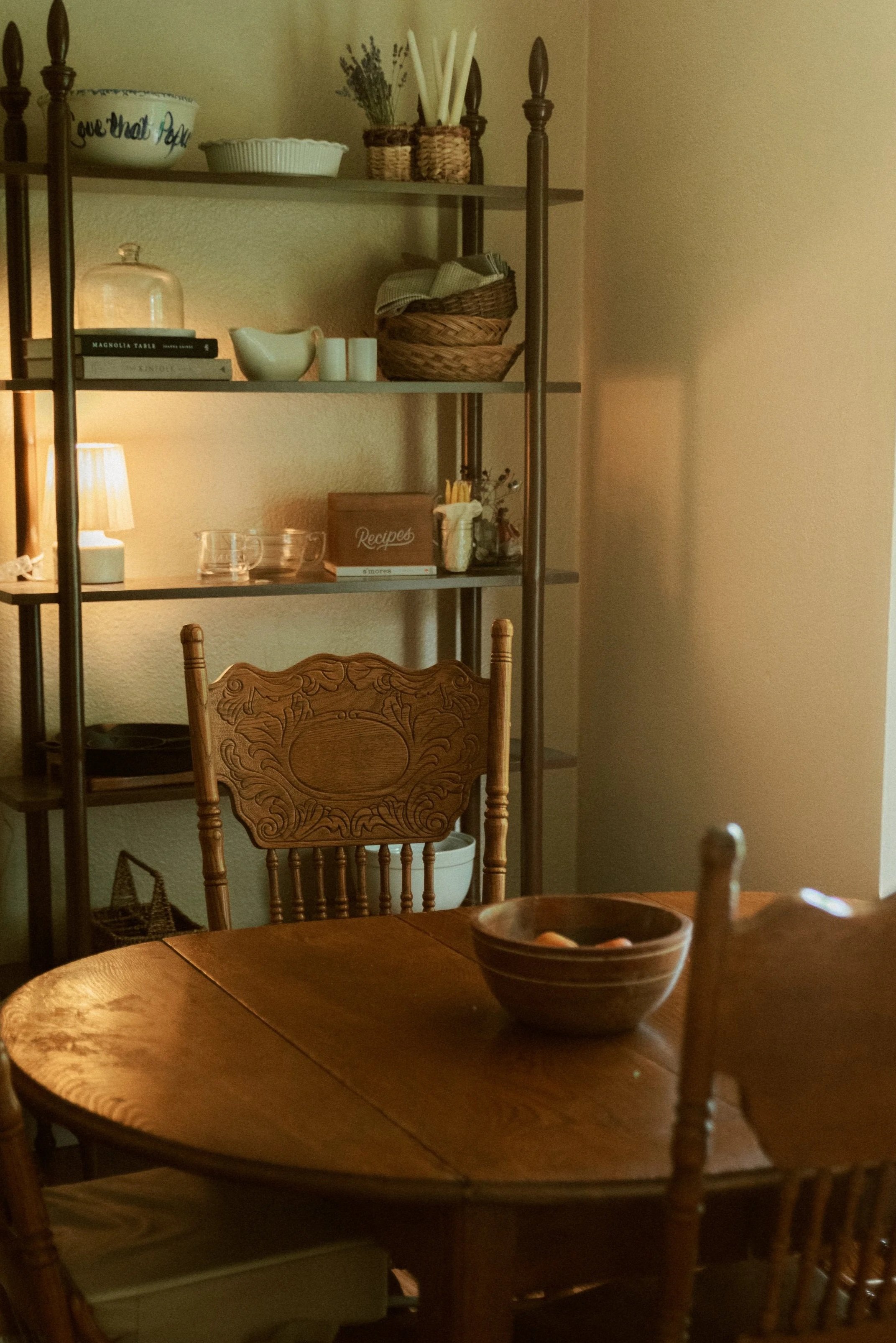
Why the Table?
Every home has one. Some are worn smooth by decades of shared meals, while others are brand new, waiting for stories to unfold. Some gather generations beneath one roof, while others are just large enough for two. They come in different shapes, sizes, and styles, yet they all share the same purpose. The table has never simply been a place to eat. It has always been a place where life is shared.
Long before the dishes are cleared, something far more meaningful has already taken place. Stories have been told. Questions have been asked. Laughter has filled the room. Tears have been met with compassion. Celebrations have been shared. Burdens have been lightened. Ordinary evenings have quietly become the memories we carry with us for the rest of our lives. Years from now, most of us won’t remember exactly what was served, but we’ll remember who was sitting beside us. We’ll remember the conversation that lingered long after the meal had ended. We’ll remember how someone made us feel. We’ll remember that, for a little while, we belonged.
Recently, my great-grandmother’s table broke. At first, it felt like the end of something. Looking at the broken boards scattered across the floor, I realized I wasn’t grieving a piece of furniture. I was grieving everything it had quietly witnessed over the years. It had held birthday dinners, holiday meals, ordinary Tuesday evenings, prayers before meals, laughter echoing through the room, and conversations no one realized would become treasured memories until years later. It faithfully served generation after generation, never asking for recognition, simply providing a place where people could come together.
When my husband and I talked about what to do next, replacing it never felt right. Instead, we’re rebuilding it. The original boards will become part of a new table, and the legs that carried generations before us will continue carrying generations after us. It won’t look exactly the same, and perhaps that’s the point. The table is changing, but its purpose remains. As we rebuild it, we aren’t simply preserving old wood. We’re preserving a place where new memories will be made, where stories will continue to be told, and where another generation will gather. The story isn’t ending. It’s simply continuing.
As I reflected on why this mattered so deeply, I realized it wasn’t because I wanted to preserve a table. It was because I wanted to preserve what happened around it. For a long time, I thought meaningful gathering belonged to holidays and special occasions. The beautifully planned dinners. The birthdays. The celebrations. The moments worthy of photographs. But the more I reflected on the memories that shaped my life, the more I realized the moments I treasured most were rarely the extraordinary ones. They were the ordinary ones. A slow Saturday breakfast. Dinner after a long day. A friend who stopped by unexpectedly. Coffee shared across the kitchen table. Conversations that happened because no one rushed to leave. These ordinary moments rarely feel significant while we’re living them, yet they quietly become the foundation of our relationships and the stories we tell years later.
That realization changed the direction of ForeGather.
The everyday table became the heart of everything we do because ordinary days make up most of our lives. If we only wait for birthdays, holidays, and special occasions to gather, we miss hundreds of opportunities every year to know one another more deeply. Relationships are not built a few times each year. They are built meal after meal, conversation after conversation, through the faithful rhythm of simply showing up for one another. The everyday table reminds us that connection isn’t reserved for life’s biggest celebrations. It is cultivated in the quiet faithfulness of ordinary life.
Somewhere along the way, many of us lost this rhythm. Not because we stopped caring about the people around us, but because life became louder. Our calendars filled. Notifications demanded our attention. Evenings became rushed. Convenience slowly replaced conversation. We have more ways to communicate than at any other point in history, yet many of us feel less connected than ever before. It has become easier to scroll than to sit, easier to react than to listen, and easier to assume than to understand. Everything around us competes for our attention, leaving very little room to simply be present with the people sitting across from us.
The table offers something our culture desperately needs. It invites us to slow down, to linger a little longer, to ask another question, to listen before responding, to share stories before assumptions, and to place our attention on the people in front of us instead of the distractions around us. Gathering doesn’t require everyone to think the same, agree on everything, or see the world through the same lens. It simply asks us to make room for one another. Around a table, we remember that every person has a story worth hearing, that relationships are strengthened through presence, that understanding grows through conversation, and that community is formed when people continue showing up for one another, even when life is complicated.
Perhaps that is one of the greatest gifts we’ve quietly lost.
Not the table itself.
But the rhythm of returning to it.
The habit of lingering.
The willingness to make room.
The simple practice of sitting face to face, sharing a meal, and remembering that life was never meant to be lived alone.
And perhaps that’s why the table still matters today as much as it ever has. Not because it’s old-fashioned or nostalgic, but because it continues to offer something our hurried, distracted world longs for: a place to slow down, a place to be known, a place to belong, and a place to return to.
That is where the story of ForeGather begins.